
Paring its early gains, benchmark BSE Sensex fell by 304 points on Wednesday as investors booked profit after recent gains amid concerns over inflation and supply constraints. Despite a firm start, the 30-share BSE barometer declined by 304.48 points or 0.53 per cent to settle at 57,684.82. During the day, it tanked 420.71 points or 0.72 per cent to 57,568.59.

Equity benchmark Sensex rallied 936 points on Monday, helped by heavy buying in banking and IT counters along with decline in oil prices amid hopes of headway in renewed diplomatic talks between Russia and Ukraine. A fresh round of talks is expected on Monday between Ukrainian and Russian officials. Rising for the fifth straight session, the BSE Sensex jumped 935.72 points or 1.68 per cent to settle at 56,486.02.

The recent recalls come amid increased FDA scrutiny of medicines produced in India.

While about 8,000 people are in the long list of invitees, the select list features just a few hundred people, including prominent politicians, leading industrialists, top film stars, sportspersons, bureaucrats and diplomats.

It also asked why the data shared pertained to a period from April 2019 even though the scheme for anonymous political funding was introduced in 2017.

He also said that there were around 620 cases of black fungus or mucormycosis in the city, but there is a shortage of Amphotericin-B injections used in its treatment.

US District Judge Beryl Howell in Minneapolis denied Ranbaxy's request, the court filing showed.

As many as 24 special economic zone (SEZ) developers including Dr Reddy's Lab and Tata Consultancy Services have sought more time from the government to execute their projects.

A reading of the reports suggests that there is no standard practice for reporting political contributions and it is left to the company's discretion to report them as they find fit.

Rosier year-end seen for Indian pharma thanks to faster US approvals.

The Drugs Controller General of India (DCGI) has granted permission to the Serum Institute of India (SII) to manufacture the Sputnik COVID-19 vaccine in India for examination, test and analysis with certain conditions, official sources said.

From steel tycoon Lakshmi Mittal to billionaire Sunil Bharti Mittal's Airtel, Anil Agarwal's Vedanta, ITC, Mahindra and Mahindra, and a lesser-known Future Gaming and Hotel Services were among the prominent buyers of the now-scrapped electoral bonds for making political donations.
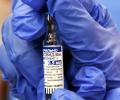
The government is hopeful of a speedy launch of single-dose COVID-19 vaccine Sputnik Light in India and all stakeholders, including the Russian manufacturer and its Indian partners, have been directed to fast-track the application and regulatory approval procedures for the jab to boost the country's vaccination drive, sources said.

This import duty exemption would remain in force till October 31 this year.

The parties intend to start the production of Sputnik V in the beginning of 2021, it added. Currently, Phase III clinical trials are approved and are ongoing in Belarus, the United Arab Emirates, Venezuela and other countries, as well as Phase II-III in India, RDIF said.

Addressing a press briefing, Union Health Secretary Rajesh Bhushan said Zydus Cadila, Sputnik V, Biological E and Gennova are other vaccines also in the pipeline which are in advanced clinical trials in India.

...followed by financial services, IT, and sales and marketing.

The emergency use of the drug will be for adult COVID-19 patients with SpO2 93 percent and who have a high risk of progression of the disease including hospitalisation or death subject to certain conditions

Hospitals to recover from sluggish Q3; diagnostics' growth rate at pre-Covid levels.

Favipiravir is the only oral anti-viral treatment approved in India for potential treatment of patients with mild to moderate Covid-19 disease.

The phase-three human clinical trial of indigenously developed anti-coronavirus vaccine candidate Covaxin began at the AIIMS in New Delhi on Thursday, with Dr M V Padma Srivastava, the chief of Neurosciences Centre at the premier institute, and three other volunteers receiving the first dose.
The pharmaceuticals sector is expected to post a revenue growth of around 13.5 per cent and a net profit growth of 30.3 per cent for the third quarter of 2023-24 (FY24), riding on the approval for niche drugs in the US market, fall in raw material prices and correction in shipping rates. In the healthcare segment, hospitals are expected to post revenue growth of 13 per cent during the coverage, while net profit growth would be around 37 per cent, ICICI Securities said in a note. However, the performance may not be comparable on a sequential basis due to the offset of the festive season in Q3FY24, the analysts noted.
Analysts are expecting pharmaceutical companies to post sales growth of 10-11 per cent in the second quarter this financial year while the Ebitda (earnings before interest, tax, depreciation, and amortisation) margins are anticipated to improve by about 110 basis points. Ebitda improvement will be led by lower input costs because prices of active pharmaceutical ingredients (APIs) are 5-15 per cent lower year-on-year (Y-o-Y). Axis Capital said sales growth would be around 10 per cent, of which growth in the India market would be 11 per cent or so.

The drug that it would supply is called Olanzapine, used to treat schizophrenia and bipolar disorder.
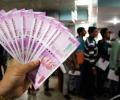
Future Gaming and Hotel Services whose director is the lottery magnate Santiago Martin is the top purchaser of electoral bonds having purchased bonds worth Rs 1,368, according to data uploaded by the Election Commission of India on its website on Thursday.

Russia's central bank early on Tuesday raised interest rates to 17 per cent to counter the 50 per cent rouble fall in six months.

The drug comes in powder form in a sachet, which is taken orally by dissolving it in water. It accumulates in the virus-infected cells and prevents virus growth by stopping viral synthesis and energy production.
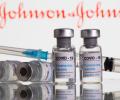
The US Food and Drug Administration had in February approved Johnson & Johnson's COVID-19 vaccine that works with just one dose for emergency use.

Equity benchmarks continued their winning momentum for the third day on Thursday and jumped over 1.50 per cent, tracking an overall bullish trend in Asian equities. On the political front, the BJP headed for a second straight win in politically crucial Uttar Pradesh and dominated the trends chart in three other states. The 30-share BSE benchmark Sensex opened in the green and further zoomed 1,595.14 points or 2.91 per cent to 56,242.47 during early trade.

Like pharmaceutical companies globally - which used to enjoy a preferential exchange rate in Venezuela - Indian producers have been left badly stung by the collapse of the bolivar currency

The government was hoping to roll out the GST regime from April 2016.

In a virtual conference from Moscow, Dmitriev said Sputnik V is not only 'one of the most effective' but also among the 'affordable' vaccines in the world.
Domestic pharma major Panacea Biotec in collaboration with Russian sovereign wealth fund Russian Direct Investment Fund (RDIF) has begun the production of 'Sputnik V' COVID-19 vaccine in India, according to a joint statement issued.

Many say trend could lead to concerns on manufacturing quality in Indian facilities.

In a surprise announcement in April, Sun and Ranbaxy -- at that time owned by Japan's Daiichi -- declared an all-stock deal to create India's largest and world's fifth-largest drugmaker in an over $4 billion deal.

Health Minister Harsh Vardhan said the COVID-19 vaccine will be available in the next few months and it is estimated that by July-August 400-500 million doses will be made available for 25-30 crore people.

The Centre told the apex court that it has fast tracked the emergency approvals for foreign produced COVID-19 vaccines that have been granted approval in other countries
The government should take measures to promote innovation and R&D while simplifying regulations for the sector in the upcoming Union Budget, as per pharmaceutical industry bodies. Outlining the wish list for the sector in the upcoming Union Budget, Indian Pharmaceutical Alliance (IPA) secretary general Sudarshan Jain said the domestic pharma industry is currently around $50 billion in size and aspires to grow to around $130 billion by 2030 and $450 billion by 2047. "To achieve this vision, the Union Budget 2023-2024 should help fuel innovation and R&D, which will set the pace for propelling the pharmaceutical industry forward," he told PTI.

An acute drug shortage in the US and stable pricing along with product launches are likely to boost revenues of India's pharmaceutical companies during the first quarter of this financial year, analysts said. Most brokerages estimate a top line growth of around 14-15 per cent, with earnings before interest, taxes, depreciation, and amortisation (Ebitda) growth of 24-30 per cent for Q1 of FY24. Hospitals are, however, likely to report lower occupancy rates, and diagnostics companies may witness an impact from delayed monsoon.

'The correction could take two to three months and traders need to be careful.' 'For investors, this could be a good time to nibble in.'
